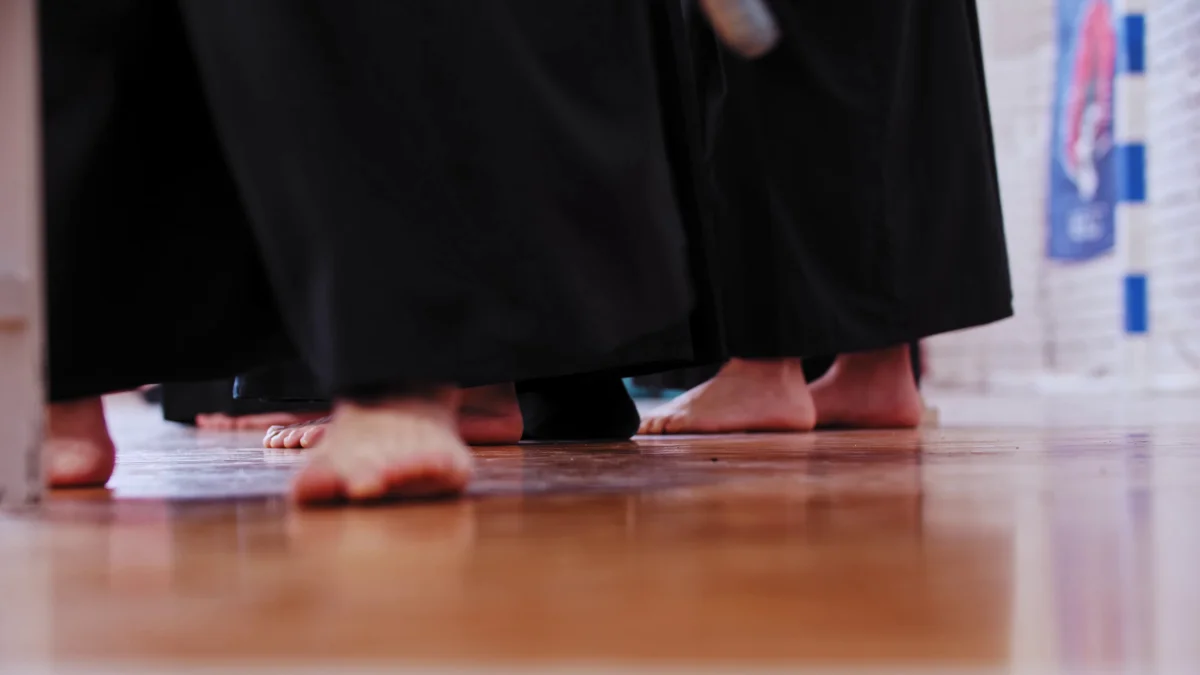
Now — teaching
Measure the strike
Three hardware variants run one firmware, and they update in the dojo. Kenshi in Silicon Valley are training on them today. A unit costs less than a set of bogu, so a club can start this month.
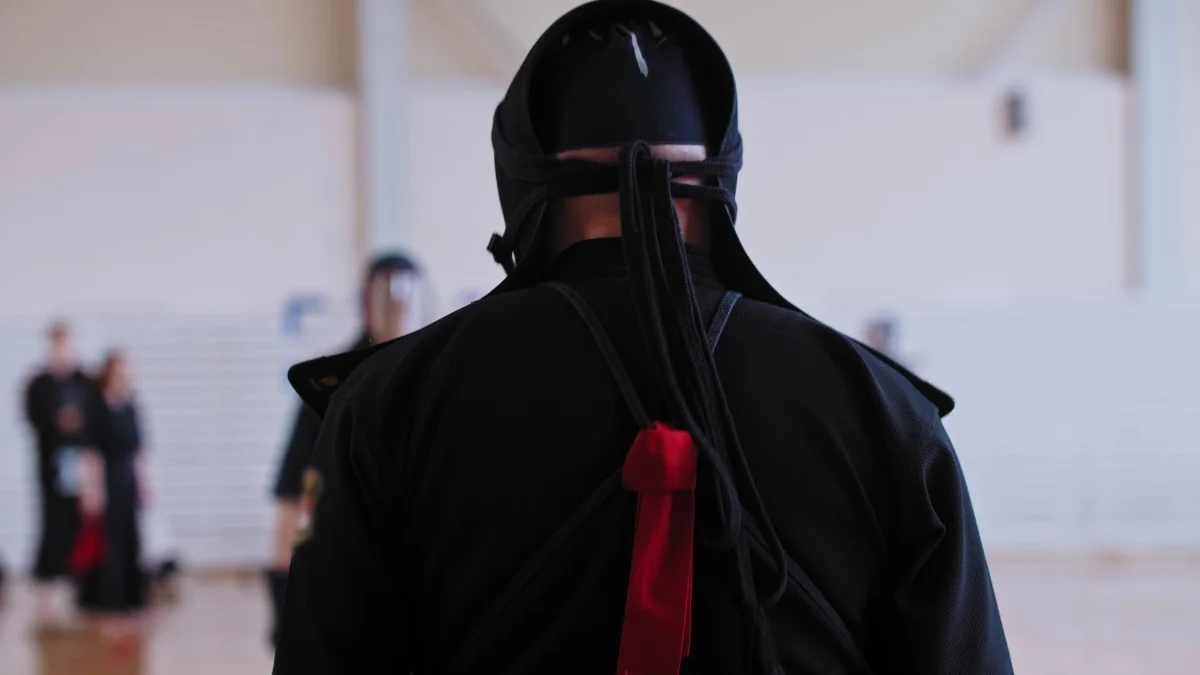
Sensors for kendo practice
A sensor in the tsuba reads every strike you make. Force, angle, target zone — shown on the guard before you raise the shinai again.
01 — Why we built it
剣道の技の中心は面への打突
Men-uchi (面打ち) starts on your first day in the dojo and never stops. Every strike you deliver, a partner absorbs. Over a career the count runs into the tens of thousands.
Most of those impacts are small. Contact-sport researchers now study exactly this kind of repeated, low-level exposure — and kendo has no data to bring to that conversation.
Nobody has measured a kendo strike at scale. We built the instrument that can.
02 — What good technique is
正しい面打ちは最も強い打突ではない
A good strike is angle, distance, and the hands — hasuji 刃筋, maai 間合い, te-no-uchi 手の内. Force is a by-product. Too much of it is a fault.
Your sensei sees the strike and calls it. The eye is quick, and it is right more often than any sensor. What it cannot hand you is a number — the thing you need to track one small correction across a hundred repetitions, or to compare this month's te-no-uchi with last month's.
So the number is for both of you. A sensei can point at the reading and name what the eye already saw. A team can ask how quickly each member's strike arrives, and train the answer.
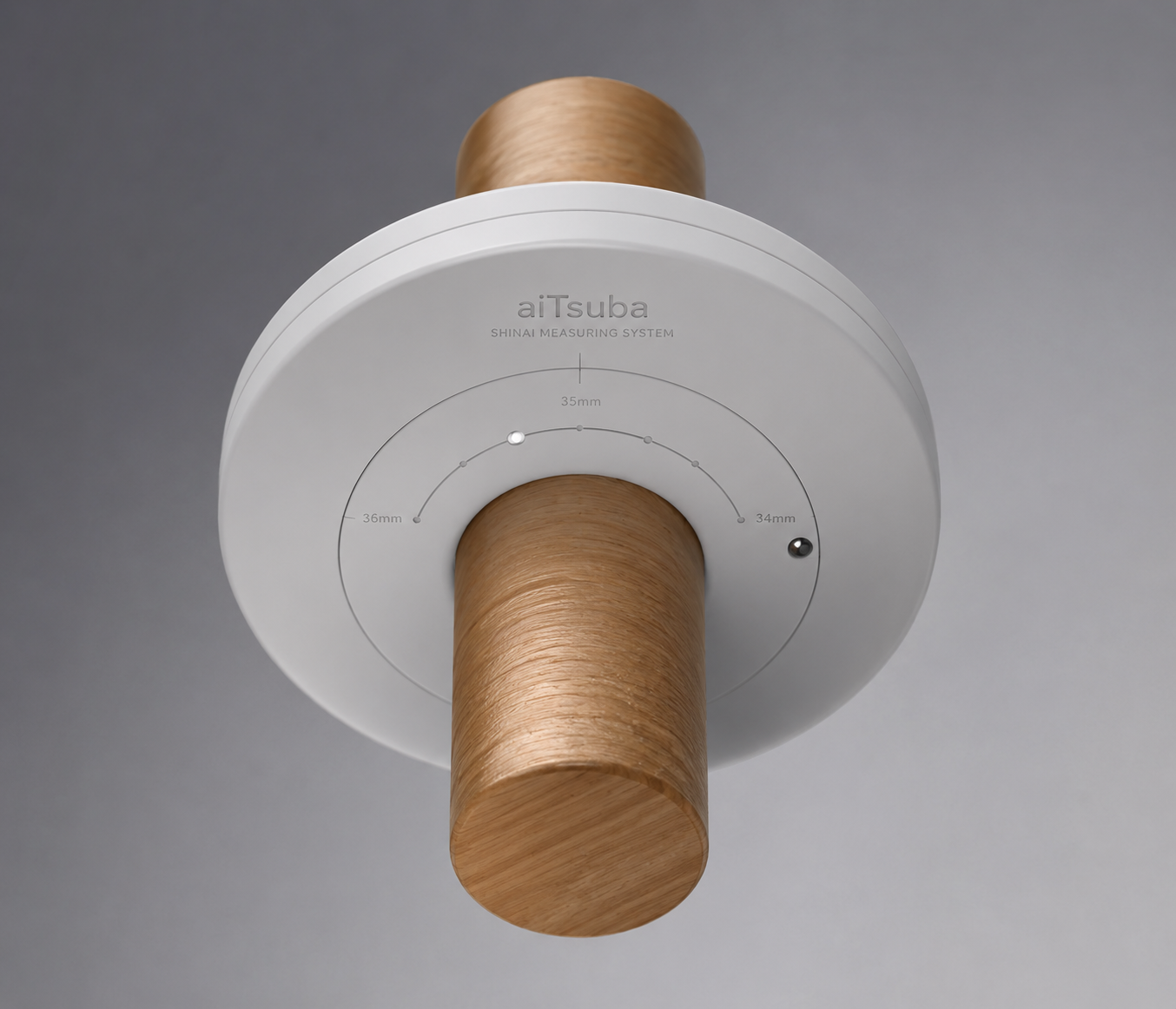
03 — The device
アイ鍔 — 鍔に組み込まれたセンサー
The tsuba takes hard use, faces you, and stays clear of your hands. A device on the handle would change your grip. This one does not touch it.
An 8×8 colour display on the guard answers within milliseconds. Colour reads severity. A pattern names the zone you hit. Between strikes it shows the blade's orientation, so you can settle the hands before the next one.
04 — What a strike tells us · 打突から分かること
Measured at the handle, estimated at the tip — kensen 剣先.
Where the edge pointed at the instant of contact — hasuji 刃筋.
How the blade turned on its way through the strike.
The trajectory the shinai 竹刀 took before impact.
Which zone you struck, and whether it counts — men 面, yoko-men 横面, kesa 袈裟, tsuki 突き.
Strikes this session, and the load carried across every session before it.
05 — From the dojo floor to the dataset
道場からデータへ
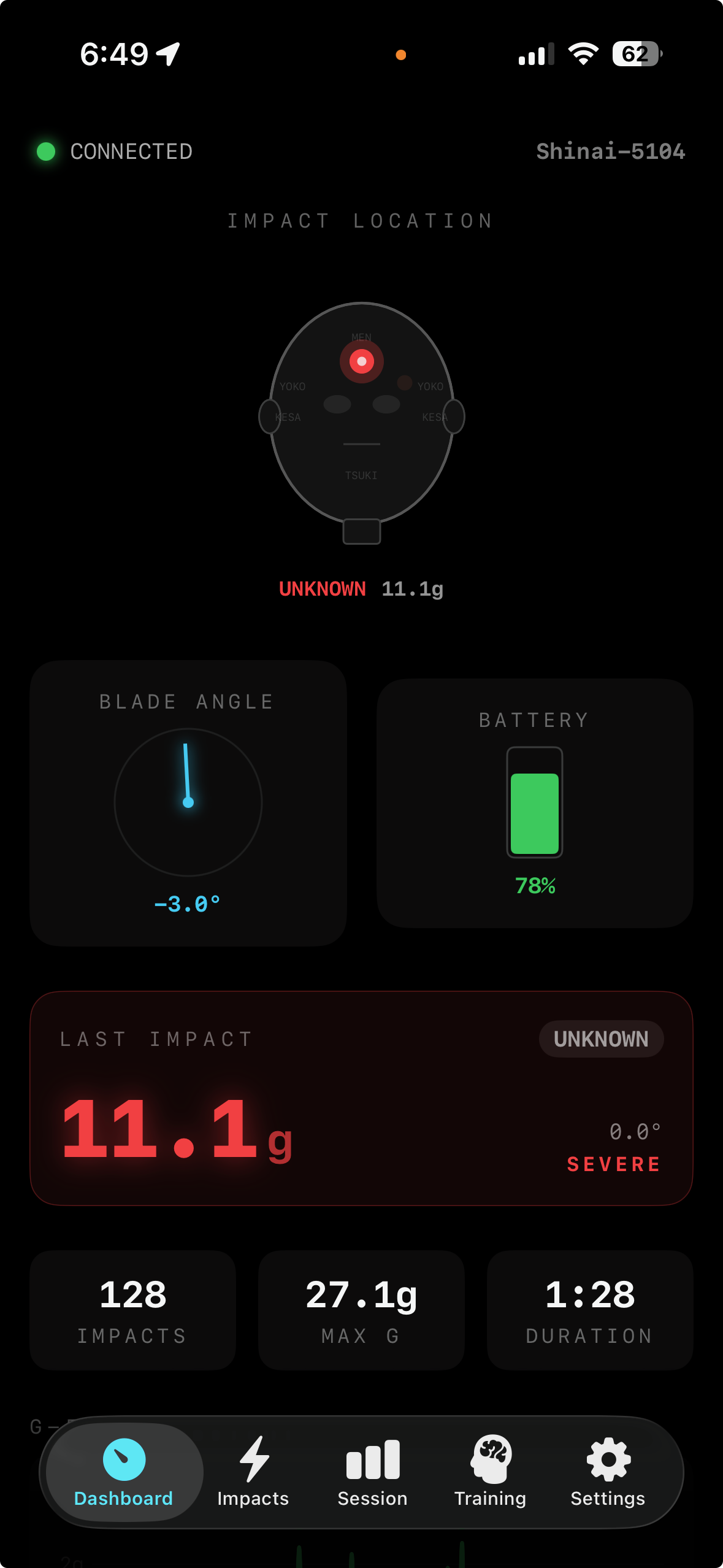
Each device talks to an iPhone over Bluetooth. It also serves a dashboard over Wi-Fi to any laptop in the room — open a browser, nothing to install.
You get the waveform of each strike, a hit log for the practice, and a CSV you can take away. A coach reads one student's night. A researcher reads a hundred.
Now — teaching
Three hardware variants run one firmware, and they update in the dojo. Kenshi in Silicon Valley are training on them today. A unit costs less than a set of bogu, so a club can start this month.
Next — protection
Better materials and structures that turn strike energy aside instead of passing it through. Any claim about a safer men has to be measured to be believed — which is why the sensor came first.
We make no medical or clinical claims. The next step is collecting data, in real dojos, with people who train every week.
ありがとうございました
Tell us where you train. We will write when devices are ready, and sooner if we are collecting data near you. Questions and introductions are welcome.